


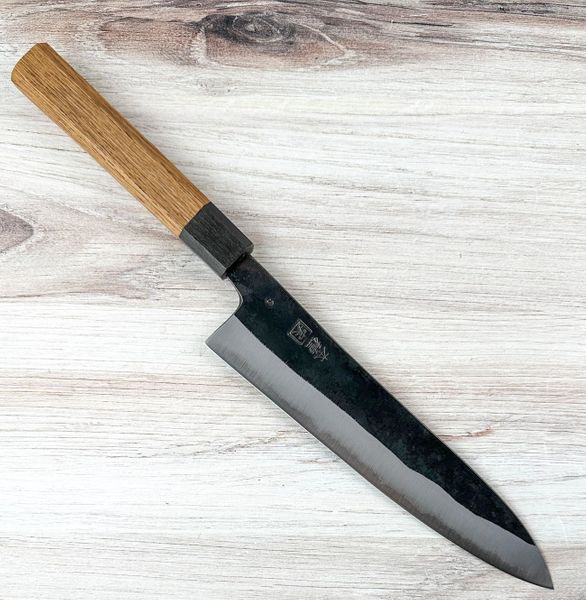
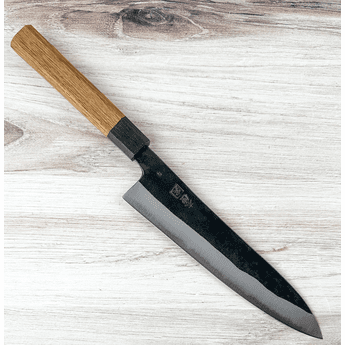
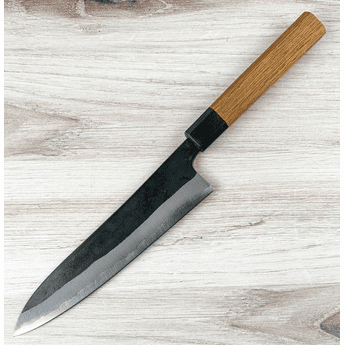
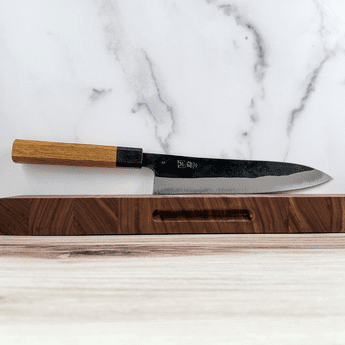
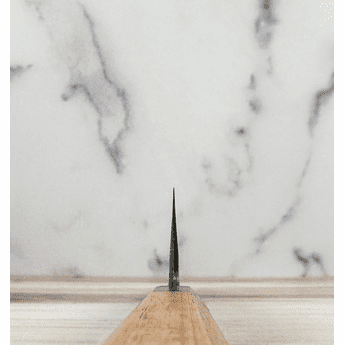


This updated Tanegashima Gyuto by Tabata Hamono features a rustic kurouchi finish and an improved grind that delivers noticeably better cutting performance. The blade uses Blue #2 (Aogami #2) carbon steel at the core, a steel prized for its excellent edge-taking ability, sharpness, and edge retention. The new geometry is thinner behind the edge while maintaining good spine strength, giving the knife a smooth, efficient feel through vegetables, proteins, and herbs.
Each knife is handmade and hammer forged by Tabata Hamono, a small blacksmith shop located on Tanegashima Island, south of Kagoshima in Kyushu. The Blue #2 core is clad in stainless steel for easier maintenance while still allowing the edge to sharpen like traditional carbon steel. The kurouchi finish adds a rustic character and helps protect the upper portion of the blade. Chefknivestogo is proud to be the first dealer in the USA to offer knives from this talented maker.
Care Instructions: Blue #2 is a reactive carbon steel at the edge. Wash and dry the knife promptly after use and avoid prolonged contact with acidic foods. Do not cut frozen foods, bones, or hard materials. Apply a light coat of camellia oil for long-term storage.
Each knife is made by hand so measurements may vary.Blacksmith: Tabata Hamono
Brand Name: Tanegashima
Location: Tanegashima Island, Kagoshima Prefecture, Kyushu
Construction: San Mai, Hammer Forged
Edge Steel: Blue #2 Carbon Steel (Aogami #2)
Cladding: Stainless Steel
Finish: Kurouchi
Edge Grind: Even
Bevel: Double Bevel
Handle: Oak Octagonal with Black Painted Ferrule
Weight: 6.2 oz (176 g)
Blade Length: 216 mm
Total Length: 368 mm
Spine Thickness at Heel: 3 mm
Blade Height: 46 mm
Each knife is handmade and hammer forged by Tabata Hamono, a small blacksmith shop located on Tanegashima Island, south of Kagoshima in Kyushu. The Blue #2 core is clad in stainless steel for easier maintenance while still allowing the edge to sharpen like traditional carbon steel. The kurouchi finish adds a rustic character and helps protect the upper portion of the blade. Chefknivestogo is proud to be the first dealer in the USA to offer knives from this talented maker.
Care Instructions: Blue #2 is a reactive carbon steel at the edge. Wash and dry the knife promptly after use and avoid prolonged contact with acidic foods. Do not cut frozen foods, bones, or hard materials. Apply a light coat of camellia oil for long-term storage.
Each knife is made by hand so measurements may vary.




