


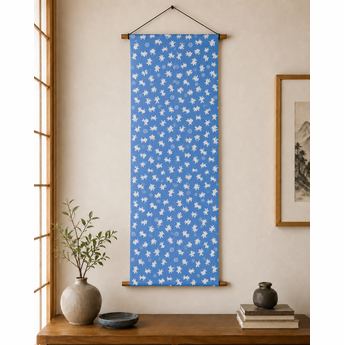


Tenugui make wonderfully versatile gifts precisely because one piece of cloth can serve so many roles - a hand towel, a table runner, gift wrap, or simply framed and hung on a wall. The flat cotton weave takes dye cleanly and dries fast, which is part of why the format has stayed popular in Japan for centuries.
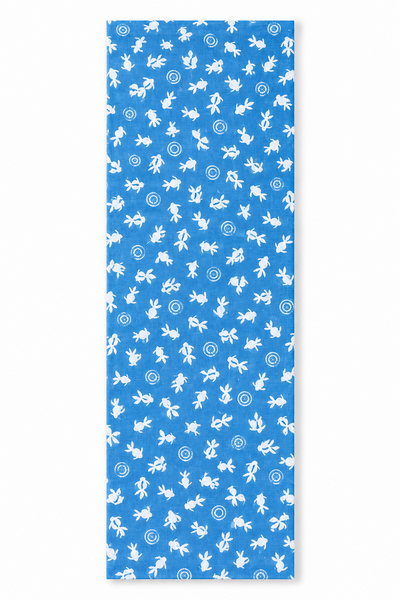
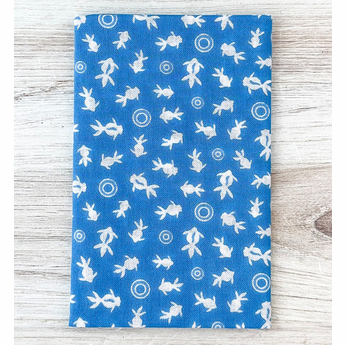
Goldfish, or kingyo, are strongly associated with summer in Japan, most familiar from the kingyo sukui (goldfish scooping) game found at nearly every summer festival. Beyond the festival association, goldfish are also considered a symbol of wealth and good fortune, and they have been a favorite subject in Japanese art and textile design since goldfish keeping became a popular pastime in the Edo period. This design scatters small white goldfish across a blue background, a light, summery motif that works well as a kitchen towel or a small gift.
Care Instructions: Dyed tenugui may fade slightly during the first two or three washes, so wash separately the first time using a gentle detergent. After washing, squeeze lightly to smooth out wrinkles and allow the towel to air dry. Both ends are intentionally left unhemmed in the traditional tenugui style and will fray slightly over time - simply trim loose threads as needed. The fraying will naturally stop and form a soft edge.Made in Japan
Material: 100% Cotton
Design: Goldfish on Blue Background
Length: 90 cm (35 inches)
Width: 35 cm (13.75 inches)
Finish: Unhemmed ends (traditional tenugui style)
Goldfish, or kingyo, are strongly associated with summer in Japan, most familiar from the kingyo sukui (goldfish scooping) game found at nearly every summer festival. Beyond the festival association, goldfish are also considered a symbol of wealth and good fortune, and they have been a favorite subject in Japanese art and textile design since goldfish keeping became a popular pastime in the Edo period. This design scatters small white goldfish across a blue background, a light, summery motif that works well as a kitchen towel or a small gift.
Care Instructions: Dyed tenugui may fade slightly during the first two or three washes, so wash separately the first time using a gentle detergent. After washing, squeeze lightly to smooth out wrinkles and allow the towel to air dry. Both ends are intentionally left unhemmed in the traditional tenugui style and will fray slightly over time - simply trim loose threads as needed. The fraying will naturally stop and form a soft edge.




