




Kumagai Kajiya is a tenth-generation blacksmith workshop based in Ofunato, Iwate Prefecture, in the Sanriku fishing region of northeastern Japan. The workshop has spent generations forging tools for fishermen, divers, and farmers who need gear that holds up to daily, hands-on work, and that same durability carries over into this oyster knife.
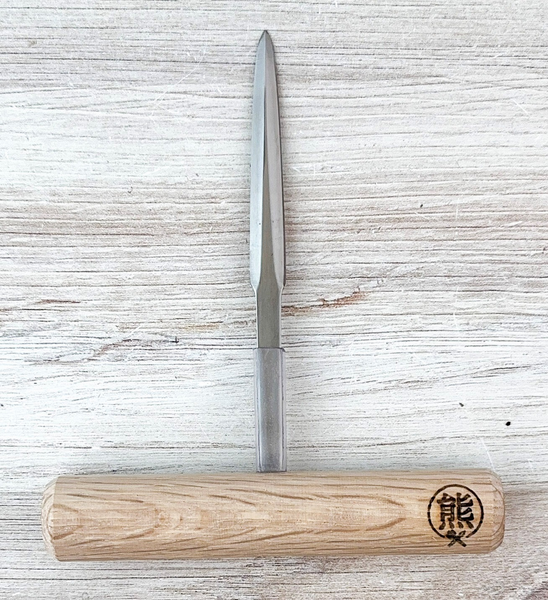
The T-shaped handle sits perpendicular to the blade, giving you a secure crossbar grip and added leverage for working the knife into the hinge and twisting the shell open. It is a natural fit for anyone shucking a large batch at once, where grip fatigue and control matter as much as a sharp edge.
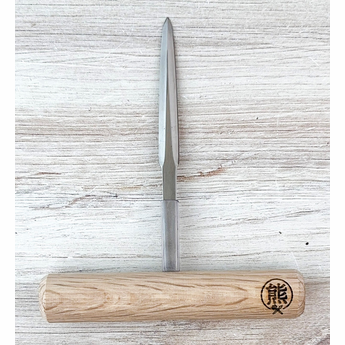
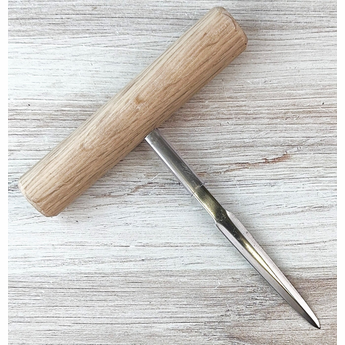
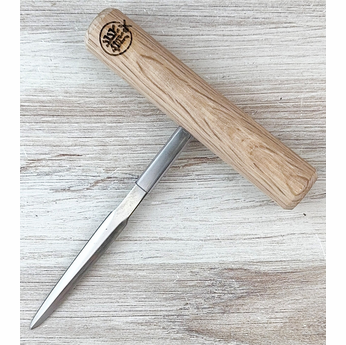
The straight, double-edged blade tapers to a narrow point built for working into the hinge of the shell, and the stainless steel holds an edge well through repeated use without the maintenance a carbon blade would need. A raw wood handle is fitted directly to the tang and stamped with a maker's mark bearing the kanji for bear, the first character in the Kumagai name.
Care Instructions: Rinse and dry the blade and handle after each use. Hand wash only; never put it in the dishwasher, since the wood handle will not hold up to prolonged soaking or heat. Keep the blade dry between uses to prevent staining, and apply a light coat of food-safe mineral oil to the wood handle occasionally to keep it from drying out or cracking.Maker: Kumagai Kajiya
Location: Ofunato, Iwate Prefecture, Japan
Shape: T-Shaped
Material: Stainless Steel Blade, Wood Handle
Blade Length: Approx. 4.9 in (12.5 cm)
Made in Japan
The T-shaped handle sits perpendicular to the blade, giving you a secure crossbar grip and added leverage for working the knife into the hinge and twisting the shell open. It is a natural fit for anyone shucking a large batch at once, where grip fatigue and control matter as much as a sharp edge.
The straight, double-edged blade tapers to a narrow point built for working into the hinge of the shell, and the stainless steel holds an edge well through repeated use without the maintenance a carbon blade would need. A raw wood handle is fitted directly to the tang and stamped with a maker's mark bearing the kanji for bear, the first character in the Kumagai name.
Care Instructions: Rinse and dry the blade and handle after each use. Hand wash only; never put it in the dishwasher, since the wood handle will not hold up to prolonged soaking or heat. Keep the blade dry between uses to prevent staining, and apply a light coat of food-safe mineral oil to the wood handle occasionally to keep it from drying out or cracking.




