


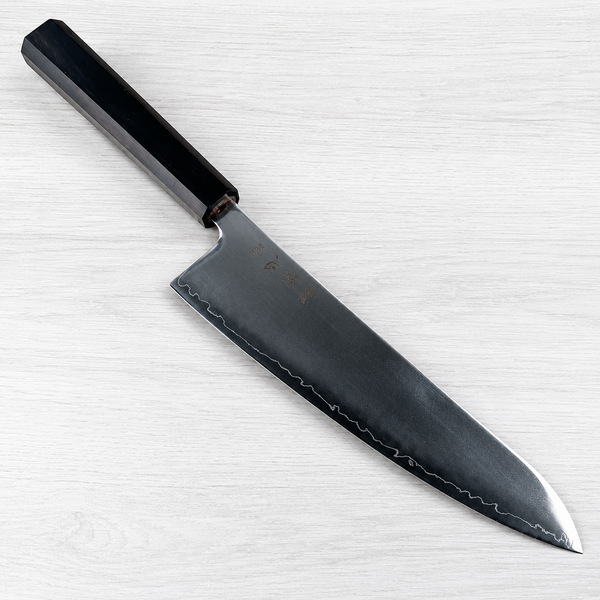
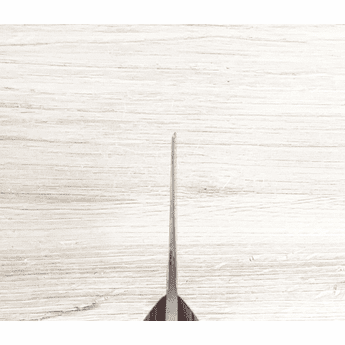


SLD steel by Hitachi sits in a genuinely useful middle ground that most cooks have not encountered. It is a semi-stainless tool steel - harder and more wear-resistant than most stainless options, with better corrosion resistance than standard carbon steels. For cooks who want the cutting performance of a hard reactive steel but find the maintenance demands of carbon too high for their kitchen environment, SLD is the answer. Hatsukokoro brings it to the Hikari gyuto in a san mai construction with soft stainless cladding, and the result is a knife that cuts with clarity and confidence while requiring significantly less reactive maintenance than Blue or White steel alternatives. Hikari means light in Japanese - a name that suits the clean, refined aesthetic of this line.
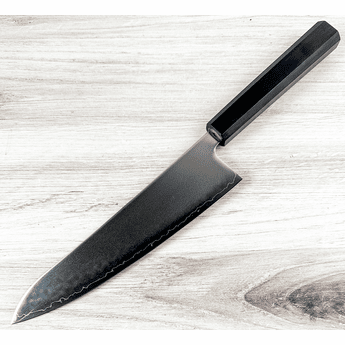
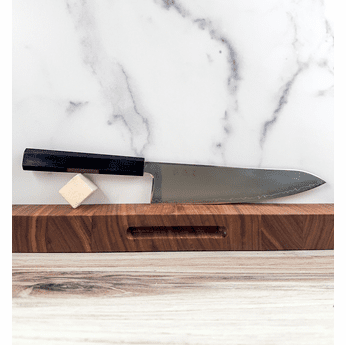
The primary grind on this gyuto is convex rather than flat, which means the blade surface bows slightly outward behind the edge - a geometry that reduces food sticking and adds some toughness to the edge without sacrificing the thin behind-the-edge profile that makes Japanese knives cut well. The edge is sharpened to 12 degrees per side, which is acute enough to deliver the clean, low-resistance cutting feel that distinguishes Japanese knives from their European counterparts. The satin polish above the shinogi promotes food release and gives the blade a refined, professional look without the reflectivity of a mirror finish. Weighing 4.7 oz, the knife is well-proportioned - substantial enough for confident extended use, light enough to work comfortably through long prep sessions. The octagonal ebony handle is fitted cleanly and sits well in a pinch grip.
Care Instructions: Hand wash and dry the blade immediately after use rather than letting it soak, and use only wood or soft plastic cutting boards. Avoid bones, frozen foods, or hard rinds, and store the knife in a saya or blade guard between uses. Sharpen on quality water stones to keep the edge at its best.Maker: Hatsukokoro
Location: Sakai, Japan
Construction: San Mai
Edge Steel: SLD Semi-Stainless Tool Steel
Grind: 50/50 Convex, 12 Degrees Per Side
Handle: Octagonal Ebony
Finish: Satin Kasumi with Etched Hamon
Weight: 4.7 oz (134 g)
Blade Length: 212 mm
Total Length: 352 mm
Spine Thickness at Heel: 2 mm
Blade Height: 49 mm
The primary grind on this gyuto is convex rather than flat, which means the blade surface bows slightly outward behind the edge - a geometry that reduces food sticking and adds some toughness to the edge without sacrificing the thin behind-the-edge profile that makes Japanese knives cut well. The edge is sharpened to 12 degrees per side, which is acute enough to deliver the clean, low-resistance cutting feel that distinguishes Japanese knives from their European counterparts. The satin polish above the shinogi promotes food release and gives the blade a refined, professional look without the reflectivity of a mirror finish. Weighing 4.7 oz, the knife is well-proportioned - substantial enough for confident extended use, light enough to work comfortably through long prep sessions. The octagonal ebony handle is fitted cleanly and sits well in a pinch grip.
Care Instructions: Hand wash and dry the blade immediately after use rather than letting it soak, and use only wood or soft plastic cutting boards. Avoid bones, frozen foods, or hard rinds, and store the knife in a saya or blade guard between uses. Sharpen on quality water stones to keep the edge at its best.




